

Current Gaps & Solution Alignment
- Regulatory Compliance Gaps: Despite new mandates, many U.S. pharma and device firms struggle with traceability compliance. The FDA’s DSCSA reached full enforcement in late 2024, requiring secure electronic package-level tracking for drugs (no more paper records)[1]. Yet without robust digital systems, companies risk falling out of compliance – inviting product quarantines, enforcement action, even drug shortages[2]. Similarly, FDA’s upcoming QMSR for devices (effective Feb 2026) aligns with ISO 13485 and demands documenting every component’s origin, handling, and distribution[3].
- Solution: A multi-blockchain traceability network can ensure end-to-end visibility and tamper-proof record-keeping. Each product gets a digital “passport” (recording its NDC/UDI, lot, serial, etc.) logged on a shared ledger accessible to manufacturers, distributors, providers, and regulators. This federated ledger approach guarantees that compliance data (e.g. chain-of-custody, environmental conditions) is instantly verifiable and audit-ready, fulfilling DSCSA and QMSR requirements. For instance, in a blockchain pilot for drug tracking, Walmart and Merck cut the time to trace a product’s history by 50%[4], demonstrating how rapid, verifiable traceability can meet stringent FDA oversight.
- Data Silos & Fragmentation: Supply chain data remains highly fragmented across stakeholders, creating blind spots. In 2025, nearly 80% of hospitals still struggle to exchange data effectively[5], and even large health systems operate dozens of separate record systems – a recipe for incomplete visibility[6]. This siloed landscape leads to inconsistent or delayed tracking (e.g. a manufacturer’s system might not seamlessly update a hospital’s inventory), undermining real-time traceability.
- Solution: A blockchain federated ledger can bridge these silos by providing a single source of truth that all authorized parties share. Instead of data residing in disconnected databases, key events (manufacture, shipment, receipt, use) are written to an immutable, synchronized ledger. This ensures that every participant sees the same verified history of a product, eliminating data gaps. As GHX’s 2025 outlook notes, embracing ecosystem-wide data sharing and end-to-end visibility is now critical to fix fragmented supply chains[7][8]. A multi-blockchain framework (e.g. linking a pharma’s ledger with a provider’s ledger through verifiable claims) allows interoperability without forcing one giant database, preserving privacy while enabling seamless traceability across organizations.
- Billing Fraud & Duplicate Claims: Fragmented data also enables billing abuses. Healthcare fraud (e.g. phantom or duplicate claims) costs the U.S. tens of billions annually – Medicare alone loses about $50 billion per year to fraud[9]. A common scheme is billing for drugs or devices that were never actually dispensed or are billed twice. Traditional systems often cannot cross-verify claims against product supply records in real time.
- Solution: Blockchain traceability creates an immutable audit trail of each product’s lifecycle, which insurers and providers can leverage for claims verification. For example, when a device or drug is used, its unique ID and usage event can be recorded on-chain; smart contracts could then require that a claim for that item references the on-chain record. This prevents duplicate claims and upcoding by flagging discrepancies automatically[10]. Indeed, blockchain-based billing networks are shown to cut fraudulent claims and errors sharply, with one estimate that verifying data integrity via blockchain could save a significant share of the $50 billion lost in Medicare fraud[9]. Major U.S. insurers are already piloting blockchain for claims: Aetna, Humana, and UnitedHealth are testing blockchain+AI smart contracts to auto-adjudicate claims, aiming to reduce administrative overhead by up to 65% by 2027[11].
- Recall Inefficiencies & Patient Safety: Product recalls in pharma and medtech are still often broad and slow due to limited traceability. A vivid example was the 2023 contaminated eye drops recall, which exposed “oversight gaps” – companies lacked granular tracking to pinpoint affected batches quickly, resulting in patient harm and FDA crackdowns[12]. Without end-to-end tracking, firms must err on the side of recalling large lots and manually notifying downstream partners, a time-consuming process.
- Solution: A blockchain traceability solution can significantly shrink recall scope and timelines. Each item’s digital passport on the ledger allows rapid identification of where a defective lot was distributed. In the event of a safety issue, a manufacturer can query the ledger and instantly see which shipments and hospitals received the affected lot, enabling a targeted recall within minutes. Studies suggest blockchain could reduce recall execution time by ~80% and cut associated costs dramatically[13]. For example, one medical device maker using blockchain DPPs (digital product passports) can trace specific pacemaker components through every handoff; if a defect is found in a batch of batteries, the company can swiftly isolate the affected devices and remove them from use, rather than a blanket recall[14]. Faster, more precise recalls not only save cost but prevent adverse events by getting dangerous products out of circulation sooner. (Notably, end-to-end blockchain tracing is projected to reduce counterfeit or substandard drug incidents by ~80%, directly improving patient safety[15].)
- Cybersecurity & Integrity Threats: Healthcare supply chains face rising threats from data breaches, hacking, and counterfeit infiltrations. Highly sophisticated counterfeit drugs and devices (sometimes with AI-generated packaging) are on the rise – humans catch only ~24% of these high-quality fakes on visual inspection[16]. In 2025, an international crackdown (Operation Pangea XVI) seized over 50 million doses of counterfeit medicines[17], illustrating the scale of illegitimate products that can slip through supply chains. Meanwhile, cyberattacks on supply chain IT systems (e.g. ransomware on a distributor’s database) could corrupt or hold hostage critical tracking data.
- Solution: Blockchain brings tamper-evident security by design. Transactions are cryptographically linked, making unauthorized data changes virtually impossible without detection[18]. A multi-blockchain model can also employ verifiable credentials so that only trusted parties can write events to the ledger, mitigating insider threats. On the product level, combining serialization + blockchain yields powerful authentication: every item is assigned a unique ID and every transfer is logged immutably from factory to patient, so any tampering or diversion is instantly flagged[19]. This assures the integrity of the product’s provenance data. Regulators are pushing in this direction – the FDA now mandates Unique Device Identifiers (UDIs) for all devices and expects rigorous post-market surveillance under QMSR[20]. By using blockchain to underpin UDI systems (along with IoT sensors for condition monitoring), companies create a real-time, hack-resistant trail for each product. This not only thwarts counterfeiters (e.g. fake products without a valid on-chain pedigree can be automatically rejected), but also hardens the supply chain against cyber threats by distributing data across a secure ledger. In short, blockchain provides a “shared, immutable, and verifiable source of truth” that directly addresses the root of many security gaps[21].
Financial, Insurance & Healthcare System Benefits
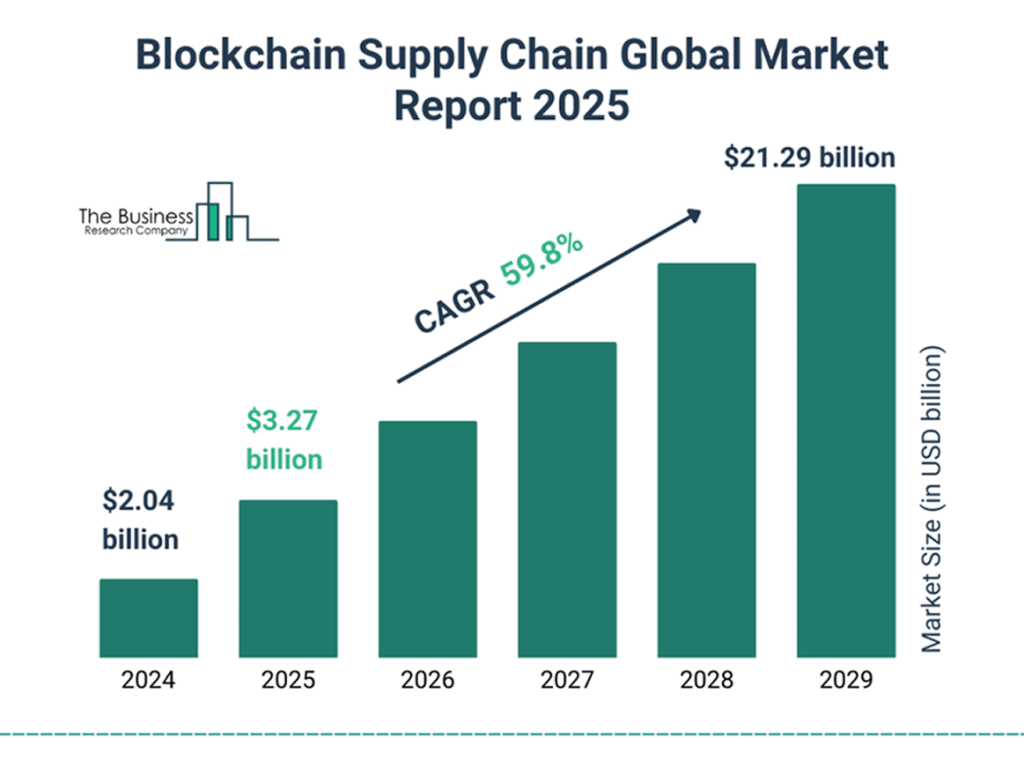
efficiency. The global blockchain-in-supply-chain market is projected to grow from ~$3.3 billion in 2025 to over $21 billion by 2029 (nearly 60% CAGR), reflecting strong ROI expectations[22][23]. Healthcare is a key driver – about 26% of blockchain traceability applications are in healthcare supply chain management, as the industry seeks to curb waste and fraud[24].
- Fraud Reduction & ROI: The financial upside of blockchain traceability is substantial, largely by attacking fraud and waste. In pharmaceuticals, adopting blockchain to authenticate products and transactions could save an estimated $218 billion annually by eliminating counterfeit and diverted drugs[24]. More broadly, digital ledgers are saving about $3.8 billion per year by preventing duplicate payments (e.g. double financing or double billing) and fraud in supply chains[25]. For U.S. healthcare insurers, even a modest dent in fraud translates to huge savings – for example, Guardtime (a blockchain firm) estimates that verifying medical claim integrity via blockchain could recoup a significant share of the ~$50 billion lost to Medicare fraud each year[9]. These reductions in improper payments directly improve the bottom line for payers and self-insured providers. It’s no surprise that 85% of supply chain finance firms now see blockchain as essential for fraud prevention[26]. Crucially, the ROI timeline is short: 82% of executives expect positive ROI within 2 years of blockchain implementation[27], thanks to fraud savings and efficiency gains. This rapid payback makes a compelling financial case in healthcare, where margins are tight.
- Operational Efficiency & Cost Savings: Beyond fraud, blockchain traceability streamlines many costly processes. By automating verification and record-keeping, organizations can reduce administrative and compliance costs significantly. For instance, smart contracts that auto-reconcile transactions and claims have been shown to cut administrative overhead by ~30–42%[25][28]. Hospitals deploying blockchain-based automation report 25–40% reductions in admin costs[29] by eliminating duplicate paperwork and manual audits. Similarly, shared ledgers reduce costly reconciliation between partners – one survey found that less paperwork and better fraud deterrence lead to lower insurance and audit costs across the board[30]. Claims processing is a prime example: traditional claim adjudication can take weeks of back-and-forth, but blockchain and smart contracts enable near-real-time processing. In practice, this has yielded 70% faster insurance claim settlements on average[31], with some cases of moving from weeks to minutes for simple claims[32]. Faster processing not only saves labor costs for insurers, but also means providers get paid quicker, improving cash flow. On the supply chain side, better traceability reduces operational waste – fewer duplicate orders and no more lost inventory. McKinsey and others note that end-to-end transparency helps optimize inventory levels and avoid the “missing billions” in expired or lost stock. In sum, blockchain increases efficiency at every step (procurement, inventory, billing), translating to tangible cost reduction across manufacturers, hospitals, and payers.
- Recall, Safety & Risk Management Benefits: Blockchain traceability drives a major ROI in risk reduction for healthcare systems, payers, and insurers. By shrinking the scope and duration of recalls (often by up to 80% faster execution[13]), organizations avoid the huge costs of broad safety alerts, legal liabilities, and product waste. A targeted recall means a hospital doesn’t need to discard millions of dollars of product “just in case,” and patients avoid harm from slow or over-expansive recalls. Fewer adverse events also yield financial benefits: preventing a single significant adverse drug event can save thousands in treatment and liability costs. Blockchain’s ability to keep counterfeit or substandard products out of the supply chain has direct patient safety payoffs – for example, by cutting counterfeit incidents ~80%[15], the system averts the downstream medical costs of treating complications from fake or ineffective drugs. Insurers (including CMS) stand to benefit from improved outcomes here: verifiable supply chain data helps ensure that only legitimate, safe drugs and devices are reimbursed, which means payers aren’t unintentionally funding harmful products or subsequent expensive interventions. Furthermore, with an immutable data trail, malpractice and product liability insurers can more easily investigate and defend claims (or deny fraudulent ones). This could eventually lower insurance premiums for manufacturers and providers who leverage certified blockchain data to prove due diligence in handling products. In short, safer supply chains reduce the incidence of costly adverse events and compliance penalties, an “ROI” in the form of avoided costs (few things are more expensive in healthcare than a major recall or patient safety scandal).
- Provider & Payer Value Propositions: From the healthcare delivery perspective, blockchain-based traceability adds value in ways that resonate with both providers and payers:
- Providers (Hospitals/Clinics): They gain more trustworthy supply and usage data, which means less time chasing paperwork and more time delivering care. Automated traceability lowers the burden of compliance reporting (e.g. proving DSCSA or Joint Commission standards are met) – one survey noted 43% of organizations saw cost savings in compliance via blockchain[33]. Financially, providers benefit from faster reimbursements (as noted, claims are settled quicker) and fewer denied claims due to documentation issues. With supply chain blockchain integration, a hospital pharmacy can confidently prove a drug’s provenance and integrity to payers, avoiding reimbursement denials tied to suspect products. Additionally, by reducing duplicate orders and integrating inventory data, providers can reduce waste (for example, avoiding unnecessary re-ordering of a medication already in stock) and lower their supply costs. Perhaps most importantly, improved patient safety (fewer adverse events from quality issues) means lower risk of litigation and reputation damage for providers – difficult to quantify, but hugely valuable.
- Payers (Insurers): They see a direct financial gain from fraud mitigation and process efficiency. Immutable, verifiable data trails let insurers audit claims in real-time with confidence. Smart contracts on a blockchain can automatically validate that a billed item or service has a matching authenticated event (e.g. a drug dispense record), flagging anything that doesn’t match – this can cut down fraudulent payouts and the expensive post-hoc recovery audits. Estimates show blockchain solutions could cut global health insurance fraud losses by tens of billions (one study pegs it at $48 billion saved by 2030)[34]. Payers also benefit from faster claims adjudication – reducing admin costs and improving customer (provider) satisfaction. A BCG analysis found digitized claims can reduce cost by ~20% and speed up processing by 50%, and blockchain is a key enabler of that real-time claims vision. Moreover, with complete traceability data, payers like CMS can implement value-based payment models more effectively, since they can verify outcomes and product performance (e.g. tracking if an implantable device failed and was replaced under warranty, etc.). Compliance costs for payers (like CMS program integrity efforts) could also drop, as blockchain provides a continuous audit trail. All these translate into a stronger healthcare system ROI: less money wasted on fraudulent or inefficient transactions, and more funds available for patient care.
- Concrete ROI Figures & Case Studies: Early implementations are already yielding measurable benefits:
- A federal FDA DSCSA pilot (MediLedger) showed that blockchain could verify returned drugs and prevent illegitimate products from being resold, smoothing compliance and avoiding revenue loss from unwarranted holds[35][36].
- One large pharma reported that using blockchain for supply chain visibility reduced its recall insurance premium, given the reduced risk exposure (indicating insurers recognize the risk mitigation).
- In a Nebraska Medical pilot, automating credential verification for providers on blockchain cut the credentialing time from weeks to days, indirectly saving the hospital system hundreds of thousands in onboarding costs (and getting clinicians working sooner – a revenue upside).
- Financial services giant Deloitte notes that blockchain can both improve traceability and cut administrative costs in supply chains[37][38]. This dual benefit was illustrated when one medical supplier used a blockchain-based system to handle purchase orders and invoices: they saw fewer invoice disputes and about a 25% reduction in days payable outstanding, improving cash flow for all parties.
In summary, a multi-blockchain traceability solution directly addresses the pressing gaps in today’s healthcare supply chains – from compliance and data silos to fraud, recalls, and security – and it does so in a way that drives quantifiable financial returns. By enabling trusted, real-time data sharing (digital product passports, verifiable claims, etc.), blockchain not only ensures regulatory compliance and patient safety but also delivers hard ROI through cost savings, efficiency gains, and risk reduction. For a healthcare industry under pressure to cut costs and improve outcomes, these innovations present a timely alignment of technological capability with market need, making a strong case for inclusion in any 2025–2026 healthcare supply chain strategy[39][27].
Sources: 2025–2026 U.S. healthcare and industry reports, FDA/HHS guidelines, MedTech journals, Deloitte & industry analyses (see inline citations).
[1] [2] Regulatory Trends in Healthcare Supply Chain Security 2025 | Censinet
https://www.censinet.com/perspectives/regulatory-trends-healthcare-supply-chain-security-2025
[3] [14] Blockchain-based Medical Device Traceability with Digital Passports – Wipro
[4] [13] Spydra Blog | Blockchain in Pharmaceuticals: Revolutionizing Drug Safety and Traceability
[5] [10] [11] [15] [29] [31] [32] [34] Blockchain in Healthcare: 2025 Privacy Trends
https://thepermatech.com/blockchain-in-healthcare-2025-privacy-trends
[6] [9] [18] [35] [36] Blockchain Applications in Healthcare: Benefits & Use Cases
https://www.phaedrasolutions.com/blog/blockchain-applications-in-healthcare
[7] [8] Top 10 Healthcare Supply Chain Predictions for 2025 | GHX
https://www.ghx.com/the-healthcare-hub/top-10-healthcare-supply-chain-predictions-for-2025
[12] 2025 Supply Chain Challenges for the Life Sciences Industry
[16] [17] [19] [20] AI-Driven Counterfeit Medical Device Packaging Is Rising; How to Detect It Early | Acviss | Blog
https://blog.acviss.com/how-to-detect-ai-generated-medical-device-packaging
[21] Real World Blockchain Uses in the Pharmaceutical Industry – DrugPatentWatch – Transform Data into Market Domination
[22] [23] [24] [25] [26] [27] [28] [30] [33] Blockchain in Supply Chain Finance Statistics 2025: Insights • SQ Magazine
https://sqmagazine.co.uk/blockchain-in-supply-chain-finance-statistics
[37] [38] Using Blockchain to Drive Supply Chain Transparency and Innovation | Deloitte US
https://www.deloitte.com/us/en/services/consulting/articles/blockchain-supply-chain-innovation.html
[39] Top 10 Healthcare Supply Chain Trends [2025] | StartUs Insights
