


Proposal Overview: A comprehensive plan to leverage blockchain technology in Kyrgyz government initiatives. The goal is to enhance transparency, modernize services, and boost economic growth through targeted crypto solutions. This presentation outlines four key solution areas (supply chain, digital wallets, DeFi, cross-border payments) and addresses policy alignment and economic benefits, backed by the consultant’s international expertise.
Target Audience: Kyrgyz government ministries and policymakers – content is presented in clear, non-technical language focusing on practical benefits for governance and the economy.
Strategic Alignment: The proposal supports Kyrgyzstan’s vision of a “Digital Kyrgyzstan” (Taza Koom), using blockchain to increase trust and reduce corruption in public administration[1]. Each solution is designed to comply with emerging national crypto regulations and international best practices.
Solution 1: Supply Chain Traceability (Multi-Blockchain)
- Problem: Lack of end-to-end visibility in supply chains can lead to inefficiencies, fraud, and corruption in trade logistics. Traditional systems are siloed and prone to data tampering[2][3]. Kyrgyz exporters (e.g. agriculture, textiles, mining) need better traceability to meet international standards and reduce illicit practices.
- Proposed Solution: Implement a multi-blockchain supply chain traceability system. Different stakeholders (farmers, factories, shippers, customs) use interoperable blockchains to record each step of a product’s journey. Cross-chain integration ensures data from disparate ledgers can be seamlessly linked and verified, creating a unified transparent record[4]. For example, a private blockchain could capture farm-origin data while a public blockchain logs export and customs information, with cryptographic links between them.
- Benefits: Every transaction or handoff in the supply chain becomes tamper-proof and trackable in real-time, greatly improving transparency and efficiency[5]. This transparency builds trust with trading partners by proving the provenance and quality of Kyrgyz goods (e.g. organic produce, genuine materials)[6][7]. It also deters corruption – officials cannot secretly alter shipping records or “lose” paperwork without it being evident on the ledger. Collaboration and trust among supply chain participants are enhanced, as each party can verify the others’ data with no single party controlling the records[4]. Over time, this system can help Kyrgyzstan meet strict import requirements of destination markets, streamlining export processes and reducing delays at borders.
- Technical Approach: Leverage the consultant’s PhD research in multi-blockchain architectures for supply chains to design the system. Incorporate IoT sensors (for real-time tracking of goods like temperature of perishables) feeding data to the blockchain, ensuring accurate input. Use smart contracts to automate compliance checks – e.g., automatically flag if a shipment deviates from its approved route or if tampering is detected. The multi-chain design means each ministry or company can run its preferred blockchain (or node) but still interoperate through cross-chain bridges, avoiding a one-size network and improving resilience[8].
- Outcome: A pilot project could start with a specific sector (say, agricultural exports like dairy or produce). By demonstrating reduced paperwork, quicker audits, and corruption reduction in that sector, the system can expand to other industries. This solution positions Kyrgyzstan as a leader in transparent trade logistics, giving it a competitive edge in the region.
Solution 2: Digital Wallets with Fiat On-Ramp & Gold-Backed Tokens
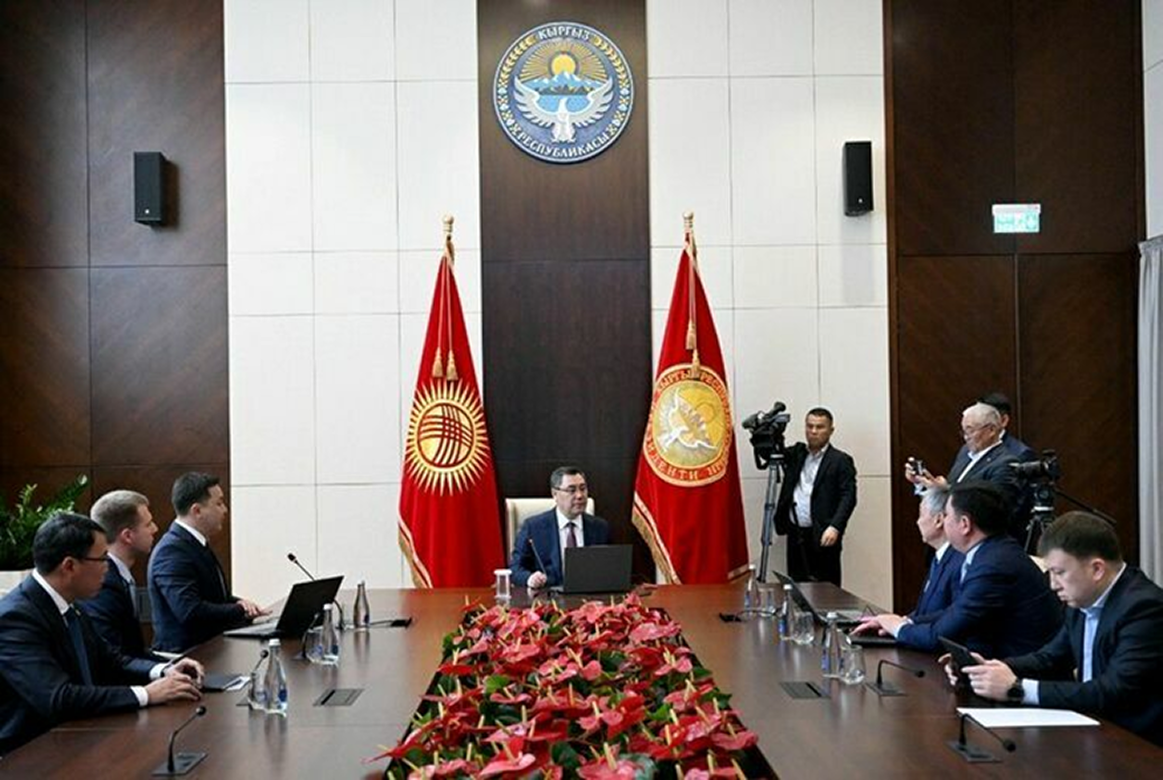
Kyrgyz officials launching a gold-backed digital stablecoin in 2025, reflecting high-level support for blockchain-based financial innovation.
– Context: Kyrgyzstan is already exploring asset-backed digital currency – in 2025 the government issued USDKG, a stablecoin pegged to the US dollar and backed by physical gold reserves, to bolster trust and transparency in digital assets[9][10]. Building on this momentum, we propose a national digital wallet platform to support everyday use of such digital currencies.
– Wallet Features: A secure mobile wallet app that can hold multiple currencies – Kyrgyz som, USDKG (gold-backed stablecoin), other asset-backed tokens, and potentially major cryptocurrencies with regulatory approval. The wallet would have an integrated fiat on-ramp/off-ramp, allowing users to easily convert som to digital assets and vice versa via bank transfer or card payment. (For example, a user can load som or card payment into the wallet, which gets converted to USDKG or other tokens.) KYC/AML verification is built into onboarding to meet compliance requirements[11]. The consultant has already developed a prototype multi-blockchain wallet with fiat on-ramps and KYC, including a gold-pegged token on Ethereum and Solana[12][13] – this expertise will directly inform the proposed solution.
– Gold-Backed Digital Token: The wallet’s flagship asset would be a gold-backed digital token (like USDKG or a token representing 1 gram of gold). This gives citizens a stable store of value in the face of local currency fluctuations, as it is tied to gold’s internationally verified price[14]. Every token is 100% collateralized by gold held by the central bank or a trusted entity, aligning with Kyrgyzstan’s policy that virtual assets must be reliably collateralized (gold is explicitly allowed as collateral under recent rules)[15]. Holding or transacting with this token is equivalent to dealing in a stable, inflation-resistant asset, which can increase public confidence in digital money.
– Use Cases: Citizens can use the wallet for everyday transactions (paying bills, buying groceries) by either using stable tokens directly or converting out to fiat when needed. The wallet can also facilitate government disbursements (pensions, aid payments) in token form for efficiency and traceability. Remittances sent from abroad (discussed further in economic benefits) could directly arrive into these wallets as stablecoins. Additionally, a gold-backed token in a user-friendly wallet could encourage savings – people might be more inclined to save when their assets are in stable form rather than cash.
– Security & Controls: The wallet will implement strong security (multi-signature authorization, biometric access, encryption) to protect users[16][17]. Smart contract-based minting and burning controls will be in place for the gold token to ensure the circulating supply always matches gold reserves (audited regularly for transparency[10]). Compliance features include automated transaction monitoring and integration with the national AML platform (e.g., reporting large or suspicious transfers to regulators, in line with Kyrgyzstan’s new AML/KYC requirements[11]).
– Benefits: This solution greatly improves financial accessibility. Urban and rural populations alike can participate in digital finance using just a smartphone, bringing more people into the formal financial system. The gold-backed token offers a safe savings instrument and a hedge against currency volatility, potentially reducing capital flight or cash hoarding. Moreover, all transactions on the platform are traceable (to regulators with proper permissions), reducing shadow economy activity and improving tax compliance over time. As the system is fully compliant with Kyrgyz regulations and FATF standards (all users verified, all tokens asset-backed), it positions Kyrgyzstan as a forward-thinking yet responsible adopter of digital currency technology[18][19].o.
Solution 3: Decentralized Finance (DeFi) Tools for Inclusion
Vision: Leverage decentralized finance applications to broaden access to financial services across Kyrgyzstan. DeFi can provide open, permissionless financial products (loans, savings, investments) accessible to anyone with a smartphone and internet. This is especially powerful in emerging markets – globally, 1.7 billion people are unbanked, yet 1.1 billion of them have mobile phones, meaning their first financial account might be a digital wallet rather than a bank[20]. Kyrgyzstan’s high mobile penetration can similarly be harnessed to leapfrog traditional banking via DeFi.
Proposed DeFi Tools: As part of the national wallet or as separate apps, introduce user-friendly DeFi services:
Micro-Loans and Credit – Smart contract lending platforms where citizens and small businesses can borrow stablecoins (or som-tokens) by posting collateral or via community pools, without lengthy bank approval processes. For instance, a farmer could take a micro-loan in tokens for seeds, using future crop tokens or other assets as collateral, all managed by smart contract with transparent terms. Interest rates and terms are algorithmically set, and repayments are tracked on-chain. This could be done in a regulated manner via a sandbox (to ensure consumer protection).
Savings and Yield – Enable users to deposit their digital assets (e.g. the gold-backed tokens or stablecoins) into yield-bearing DeFi protocols. These could be simplified “savings accounts” where, behind the scenes, the funds are funneled into safe DeFi lending platforms or government bond tokenizations, earning higher interest than a typical bank savings rate. The idea is to democratize investment opportunities – even a villager with $50 could earn interest by participating. (All this would be abstracted in the UI as a savings feature, to keep it accessible.)
Decentralized Exchange (DEX) – A platform for users to swap assets (som token, USDKG, other tokens) instantly at market rates. This provides liquidity and price discovery for digital assets in-country and reduces reliance on cash exchange markets. A Kyrgyz DEX could list tokens relevant to the local economy (e.g. tokens representing shares in local enterprises or commodities) under regulatory oversight.
Financial Inclusion Impact: These DeFi tools allow the “unbanked” or “underbanked” to access financial services that were previously out of reach[21][22]. For example, someone without formal credit history could still get a micro-loan if they can provide tokenized collateral or via community lending circles on blockchain. Smart contracts remove costly intermediaries, so even small loans are feasible. Transaction costs are low and there’s no need for physical bank branches, which suits Kyrgyzstan’s many remote regions. Essentially, DeFi can offer a parallel financial system that is open to all, driving competition and inclusion.
Risk Management: We will implement risk controls to align DeFi with national policy. This includes identity-linked wallets (preventing total anonymity), transaction limits for retail users, and perhaps a regulatory sandbox phase for each DeFi service. Smart contracts would be audited and possibly carry insurance or guarantees (for example, a reserve fund to backstop smart contract failures, perhaps supported by the government or development partners). By taking these precautions, Kyrgyzstan can embrace the innovation of DeFi while safeguarding users, a balance that regulators worldwide (like in the EU’s MiCAR and US proposals) are striving to achieve[23].
Long-Term Vision: A thriving local DeFi ecosystem could also attract international attention – foreign investors might provide liquidity into Kyrgyz lending pools, and Kyrgyz developers could create DeFi solutions for unique local needs (with potential to export these solutions to other emerging markets). This aligns with the goal of positioning Kyrgyzstan as a regional blockchain technology hub and can stimulate the tech startup scene (as expanded in later slides on economic benefits).
Solution 4: Cross-Border Payments Leveraging Stellar Blockchain
Current Challenge: Kyrgyzstan’s economy is heavily reliant on remittances and international trade. Cross-border payments through traditional banking are often slow (days to settle) and expensive, with fees and forex losses sometimes totaling 5–7% of the transfer amount. Many Kyrgyz workers in Russia, for instance, face high fees sending money home, and local businesses encounter delays receiving payments for exports. These frictions not only tax citizens but also reduce overall economic flow.
Stellar-Based Payment Platform: Utilize the Stellar blockchain – known for its focus on cross-border transactions – to build a Kyrgyz cross-border payment network. Stellar offers near real-time settlement and ultra-low transaction fees (on the order of fractions of a cent per transaction)[24]. The consultant has direct experience here, having developed a cross-border payment app on Stellar (for a private client) that achieved secure, low-cost international transfers[25][16]. We propose a similar application tailored for Kyrgyzstan’s needs:
Remittance Corridor: Create a user-friendly mobile app for migrant workers (e.g., in Russia, Kazakhstan, Turkey) to send money home using Stellar’s network. A worker could deposit local currency at a partner exchange or bank, which is converted to a Stellar-based token (like a ruble-token or directly to a som-token or stablecoin) and sent via Stellar to the recipient in Kyrgyzstan. The recipient instantly receives it in their digital wallet and can cash out in som through local partners. This process can cut transfer fees dramatically (potentially to <1%) and transfer time to minutes, putting more money in families’ hands and in much shorter time. Stellar’s design with anchors (licensed financial institutions that handle fiat on/off ramps in each country) means we can integrate with Kyrgyz banks or mobile money providers for seamless last-mile delivery[26][27].
Trade Payments: Enable Kyrgyz import-export businesses to use the network for invoices and payments. For example, an exporter in Kyrgyzstan can receive payment from a buyer in Europe via a Euro token that converts to a USDKG or som stablecoin on arrival, all on Stellar rails. This would clear in seconds, with transparency, and no correspondent banking hassles. Smart routing on Stellar finds the best conversion path (even through intermediary currencies) to minimize FX costs[28][16]. Such a system could also facilitate government cross-border transactions (e.g., for foreign aid disbursement or regional development projects) with full traceability.
Advantages of Stellar: The Stellar network has a built-in decentralized exchange and supports multi-currency transactions, which is ideal for Kyrgyzstan’s multi-faceted payment needs[28]. It can handle thousands of transactions per second, and importantly, its consensus mechanism is energy-efficient (no mining required), so it won’t strain Kyrgyzstan’s energy grid – a noted concern with some blockchains and crypto mining[29]. Stellar also has a growing ecosystem: for instance, integration with MoneyGram enables cash pick-up of Stellar transfers in many countries. By tapping into this, Kyrgyzstan can amplify the reach of its payment network without building everything from scratch[26][30].
Compliance and Security: All participants (whether individuals or businesses) would go through KYC verification when enrolling, and transactions can be screened in real-time. Notably, Stellar allows tagging transactions with memos for compliance, and anchors (the on/off ramp institutions) perform AML checks[31][32]. This means the system can be compliant with Kyrgyzstan’s tightened anti-money laundering framework – e.g., no anonymous wallets, and any large or suspicious transfers flagged to authorities via the RUNEXKG monitoring platform[33][34]. From a security perspective, the system would use end-to-end encryption for user data and implement multi-signature for institutional accounts to prevent misuse[16].
Expected Impact: This solution directly addresses the remittance cost issue – Kyrgyzstan in 2022 had remittances around 14% of GDP, with potentially hundreds of millions lost to fees. Cutting those fees means more disposable income for families (supporting education, consumption, investment) and greater financial stability in rural areas that depend on money from abroad. On the trade side, faster payment means better cash flow for businesses and perhaps an edge in competitiveness (a buyer might favor a partner that can settle payments instantly). Overall, a Stellar-powered cross-border system aligns with Kyrgyzstan’s goal of being a “digital hub” by providing next-gen payment rails for trade and finance[35].
Regulatory & Policy Alignment: Transparency and Compliance

Kyrgyz government engaging with an international blockchain expert – signaling high-level commitment to transparency and digital innovation.
– Enhancing Transparency & Trust: A core promise of blockchain is a tamper-proof public ledger for transactions. This transparency can be a powerful tool for governments to reduce corruption and build citizen trust[36]. In Kyrgyzstan, where corruption has been identified as a major challenge, blockchain-based systems can ensure that public data and transactions are immutable and auditable by oversight bodies. For example, if land registries or public procurement contracts are managed on a blockchain, any attempt to alter records or favor a cronies’ bid would be visible to all and locked by consensus, deterring corrupt behavior. The distributed nature means no single official can secretly manipulate the whole system[37]. President Sadyr Japarov himself noted that adopting blockchain across state functions will “promote greater transparency and traceability” and reduce bureaucratic inefficiency in government operations[1]. Our proposals (supply chain, wallets, etc.) all embed this principle of transparency to help clean up processes prone to fraud (whether it’s bribes at customs or misallocation of funds). Smart contracts also add integrity – rules encoded in software execute automatically without arbitrary human intervention, which can greatly clean up areas like public subsidies or tenders (the terms can’t be changed mid-way, and all actions are logged).
– Reducing Corruption Opportunities: By cutting out middlemen and central points of control, blockchain limits the “touch points” where rent-seeking or bribes can occur[38][39]. For instance, a traditional paper-based supply chain might require stamps and signatures at multiple offices – each an opportunity for an unofficial payment. A blockchain system replaces that with a digital verification that cannot be forged or bypassed, thus shrinking the space for petty corruption. In areas like social welfare distribution or foreign aid, blockchain vouchers (as used by the World Food Programme) have been shown to improve efficiency and reduce fraud by directly crediting recipients and enabling audits[40][41]. Adopting similar approaches in Kyrgyzstan (perhaps for distributing agricultural subsidies or educational grants via tokens) would ensure the money goes where intended, and any tampering is evident.
– KYC/AML Compliance: Embracing crypto solutions requires robust measures to prevent misuse by criminals. Know-Your-Customer (KYC) and Anti-Money Laundering (AML) compliance are baked into our proposal. All user-facing applications (digital wallets, etc.) will require verified identity (passport/ID checks) and use transaction monitoring tools. This aligns with Kyrgyzstan’s recent regulatory moves: the government has prohibited anonymous crypto accounts and mandated identification of all clients of virtual asset service providers[42][43]. We will ensure any platform we deploy works only with licensed providers and enforces these rules. Additionally, transaction data can be analyzed for suspicious patterns (so-called KYT, “Know Your Transaction”), working with the RUNEXKG state monitoring platform that Kyrgyzstan launched for oversight of crypto activities[34]. By designing compliance into the system from the start, we protect against illicit finance, be it money laundering, terrorism financing, or sanction evasion. This approach not only satisfies domestic law but also keeps Kyrgyzstan in good standing internationally (FATF recommendations). In short, our solutions aim to deliver the benefits of crypto without the chaos, through strong governance.
– National Crypto Regulations & Sandboxing: Kyrgyzstan is establishing itself as a crypto-friendly yet regulated jurisdiction – passing new laws on virtual assets, licensing exchanges, and even exploring a national crypto reserve[44][45]. We will work within this evolving framework. Specifically, we recommend using regulatory sandboxes for any innovative product (like DeFi tools) – a controlled environment under the National Bank’s supervision where these solutions can be tested with limited scope. This approach is endorsed by Kyrgyz policymakers and mirrors global best practices (e.g., UK, Singapore sandboxes). It allows the government to observe risks and outcomes closely before full launch[46]. Our team would coordinate with the National Bank of the Kyrgyz Republic to get sandbox approval for pilots, ensuring policymakers are comfortable at each step. The consultant’s familiarity with international regulations will help tailor each solution so that laws and regulations are not just met but actively informed – we can provide policy advice on topics like stablecoin frameworks (e.g., how to treat USDKG in accounting/tax), data privacy on blockchain, and consumer protection. By aligning technology with policy goals (transparency, compliance, innovation), this proposal strengthens the case that blockchain adoption can happen hand-in-hand with better governance, not at odds with it[18]. The result: Kyrgyzstan benefits from cutting-edge tech while maintaining control and sovereignty over its financial system.
Economic Benefits to Kyrgyzstan
Financial Inclusion & Remittances
- Bringing Services to the Unbanked: A significant portion of Kyrgyzstan’s population, especially in rural areas, remains unbanked or underbanked. Blockchain solutions can dramatically lower barriers to financial services. With the mobile-wallet and DeFi tools described, any citizen with a phone can save money (in stable digital form), make payments, or even access credit, without needing a bank account. This is transformative in villages where banks are absent – instead of hiding cash under mattresses (which is risky and doesn’t grow), people can hold value in a secure wallet and earn yield or interest via DeFi. They also gain access to a wider marketplace; for instance, a nomadic craftsman could directly sell goods online and receive payment tokens, expanding their customer base beyond local markets. Decentralized finance opens the door for participation in the digital economy for everyone[21], potentially lifting many out of financial isolation.
- Cheaper, Faster Remittances: Remittances are a lifeline for Kyrgyzstan, making up about 14% of GDP and supporting one in four rural households[47]. Our cross-border Stellar payment solution is designed to maximize the impact of remittances. By slashing fees from the typical 5-10% down to maybe 1% or less, a much larger share of the money earned abroad arrives in Kyrgyzstan’s local economy. For example, if $100 million in remittances face ~5% fees, that’s $5 million lost annually; cutting this to 1% saves $4 million for Kyrgyz families – money that will be spent on homes, education, or new businesses. Moreover, the near-instant transfers mean families no longer wait days or weeks for funds during emergencies. Migrants will have a convenient, legal channel to send money straight to a Kyrgyz digital wallet at home, eliminating the need for carrying cash or using informal couriers. This not only benefits households but also improves foreign currency flows into the country (more USD or RUB converted to KGS via official channels), aiding monetary stability. In addition, by routing remittances through the digital som or stablecoin system, the government gains more visibility into these flows (aggregate data), helping macro planning. It’s worth noting that Kyrgyzstan’s own digital currency initiatives (KGST stablecoin, USDKG) are partially aimed at facilitating remittances and trade[35] – our proposal amplifies that effort by providing the practical apps and infrastructure to use those tokens effectively.
- Empowering Women and Rural Communities: Financial inclusion has social benefits. Often, it’s women or remote communities that lack access to finance. By giving them direct control over digital wallets and microfinance tools, we empower these groups economically. They can receive remittances directly (with privacy and autonomy), start cottage industries with easier access to capital, or build credit histories through transparent blockchain records. In development terms, this supports Kyrgyzstan’s goals of poverty reduction and equality. International experience (e.g., M-Pesa in Kenya) shows that digital finance can increase household incomes and resilience. Kyrgyzstan can leapfrog with a modern version – secure, blockchain-based, and potentially integrated with regional payment networks (imagine Uzbek or Tajik workers also sending money via similar systems, creating a Central Asia remittance web). All told, more inclusive finance means more dynamic growth: as more citizens engage in formal economic activity, the tax base widens and entrepreneurship flourishes.
Attracting Tech Talent & Blockchain Startups
- Blockchain Hub Potential: By proactively adopting crypto-friendly policies and infrastructure, Kyrgyzstan can position itself as a Central Asian hub for blockchain innovation. This can attract both foreign direct investment and talented entrepreneurs to the country. We are already seeing early signs: the passage of Kyrgyzstan’s virtual assets law and the launch of asset-backed tokens have drawn interest regionally. There are 169 registered exchanges and growing crypto activity as of 2025[48]. Clear regulations give legal certainty, which startups crave. Kyrgyzstan’s approach of legalizing and licensing crypto activities (instead of banning) sends a strong signal that innovators are welcome, as long as they play by the rules[18]. This model has indeed begun to attract blockchain startups and even mining operations, boosting local employment and tech development[49]. Our proposal will further this by creating use-cases (supply chain, payment, etc.) that startups can plug into – for example, a Kyrgyz fintech startup might build a user interface on top of the government’s supply chain blockchain, or develop analytic services for the data it generates.
- Homegrown Talent Development: Implementing these projects will necessitate training and employing Kyrgyz IT professionals. The consultant, with academic and industry background, would conduct knowledge transfer workshops at local universities and IT hubs. Over time, a pool of skilled blockchain developers and architects will form in Kyrgyzstan. This not only serves our projects but also equips these individuals to create their own ventures. The presence of cutting-edge projects (like a national wallet or a Stellar remittance system) will inspire young programmers to specialize in blockchain. We can also encourage university partnerships – e.g., connecting with the American University of Central Asia or Kyrgyz State Technical University to introduce blockchain courses, potentially with guest lectures from global experts in the consultant’s network (Stanford Blockchain Club affiliations, etc.). The end goal is to nurture a local tech ecosystem where startups sprout to address various needs (from agri-tech traceability to crypto exchanges). The government can support incubators or innovation contests using these new blockchain platforms as a base.
- Brain Gain vs. Brain Drain: Historically, many talented Kyrgyz professionals seek opportunities abroad. By creating a vibrant tech sector at home, we can retain talent and even reverse the trend. If Kyrgyzstan becomes known as a pioneering country in blockchain adoption (similar to how Estonia became known for e-government), it will attract digital nomads, regional entrepreneurs, and possibly diaspora members to return home to build projects. The economy would benefit from new companies (and thus jobs) in software development, cybersecurity, digital consulting, etc. These jobs are typically high-paying and knowledge-intensive, contributing to a more diversified economy (beyond mining, agriculture and remittances). Over the next 5 years, this could translate into dozens of startups, some of which might scale globally, putting Kyrgyzstan on the innovation map. Government revenue also benefits: new businesses mean new taxpayers and less reliance on a narrow set of industries.
- International Collaboration: Through these initiatives, Kyrgyzstan can join international research and standard-setting efforts (for example, working with bodies on blockchain standards, participating in pilot projects with development banks). The consultant’s international credibility – publications and connections – can help bridge Kyrgyzstan to global expertise. This may result in partnerships (say, with EU or Singapore sandbox programs, or pilots funded by the World Bank or ADB). In sum, embracing blockchain not only solves domestic issues but also integrates Kyrgyzstan into the global tech community, which has far-reaching positive effects for diplomacy and trade.
Trade Logistics & Export Transparency
- Streamlined Trade and Customs: As a landlocked nation, Kyrgyzstan’s trade is heavily dependent on efficient border logistics. Blockchain-based supply chain transparency (Solution 1) will vastly improve trade facilitation. By having an immutable record of goods from origin to export, customs procedures can be expedited – officials can quickly verify shipments against the blockchain record, reducing the need for lengthy inspections. This lowers dwell times at borders and can increase the volume of trade that flows through the country (important as Kyrgyzstan also serves as a transit corridor in the region). Additionally, automated smart contracts could handle tariff payments or tax rebates for exporters, making the process smoother and less prone to human error or interference. Trade finance could also see a boost: if exporters have verifiable supply data on-chain, banks are more willing to lend against inventory or receivables, knowing the collateral (goods) is traceable and authentic. The end result is increased competitiveness of Kyrgyz exports – being known as a country that can guarantee product provenance and fast processing. For instance, a European importer might prefer a Kyrgyz supplier that offers blockchain-tracked goods because it assures quality and quick customs clearance. This can open doors to new markets and possibly allow Kyrgyz goods to fetch premium prices (e.g., organic foods with proof of origin might sell better).
- Reducing Fraud and Smuggling: Transparent supply chains help curb illicit trade. Central Asia faces challenges with re-export of sanctioned goods and smuggling. A blockchain system doesn’t magically solve geopolitics, but it introduces accountability. If every legit shipment is on-chain, it’s easier to spot irregular flows that aren’t. Over time, participation in the blockchain traceability program could become a mark of legitimacy – those who opt out may face greater scrutiny. This could deter smugglers or at least drive them out of mainstream routes. For Kyrgyzstan, cracking down on smuggling means more accurate tax and customs revenue (as evasion drops) and better relationships with trade partners (who appreciate compliance). It also helps local producers – preventing grey market goods from undercutting local products unfairly.
- Quality Assurance and Market Access: Many Kyrgyz exports, like food products or textiles, can benefit from blockchain-based quality assurance. By recording each step of production (including certifications, quality tests, etc.) on-chain, Kyrgyzstan can meet stringent import standards of developed markets. For example, EU importers of honey or dairy require proof of supply chain integrity; a blockchain system can provide an instant audit trail of a product’s journey and handling conditions. This could pave the way for Kyrgyzstan to enter higher-value markets. Other countries have used blockchain in similar ways – for instance, Everledger uses blockchain to track diamonds and prevent trade in conflict gems[41], and IBM’s Food Trust tracks food batches for safety. Kyrgyzstan can apply these lessons to its gold exports (ensuring it’s responsibly mined), mineral exports, and agricultural goods. This enhanced transparency can make “Made in Kyrgyzstan” synonymous with quality and trust. As a result, Kyrgyz producers might see increased demand and could negotiate better terms since their products come with verifiable history.
- Economic Boost: By improving trade logistics and transparency, Kyrgyzstan stands to increase its trade volumes and economic output. Efficient logistics attract business – e.g., foreign companies might use Kyrgyz warehouses or logistics services if they know the processes are modern and reliable (perhaps making Kyrgyzstan a regional distribution hub for certain goods). More exports and transit means more jobs in transportation, warehousing, and compliance. Blockchain data can also help optimize supply chains (finding bottlenecks, improving inventory management), which means cost savings for businesses that can be reinvested or passed to consumers. And with better compliance, Kyrgyzstan avoids costly international disputes or sanctions (for example, proving it’s not allowing sanctioned tech to pass through to Russia, if that’s a concern, by having transparent logs). It’s an investment in long-term sustainable trade growth. A concrete metric to aim for could be moving Kyrgyzstan up in the Logistics Performance Index and doing so by embracing digital tools. All these improvements ultimately contribute to GDP growth, rural development (for export-oriented communities), and a stronger currency backed by robust export performance.
Consultant’s Expertise & International Credibility
- Blockchain Project Leadership: The consultant is an experienced blockchain architect who has successfully delivered complex blockchain projects in finance and supply chain. Notably, he developed a Gold-Linked Digital Token and Multi-Currency Wallet on Solana & Ethereum (2024) – a system strikingly similar to Kyrgyzstan’s goals, featuring a token backed by 1 gram of gold, with full mint/burn controls and integrated KYC and fiat gateways[12][13]. This project’s success demonstrates the consultant’s ability to build and deploy multi-blockchain infrastructure that complies with regulatory standards (Stripe KYC integration, etc.). He has also built a cross-border payments platform on Stellar for a private fintech, achieving fast and secure international transfers with features like multi-signature security and real-time tracking[25][16]. These practical achievements mean the consultant can hit the ground running, using proven frameworks to implement the solutions proposed for Kyrgyzstan.
- Academic Credentials: The consultant holds a PhD in Computer Science specializing in Multi-Blockchain Supply Chain Traceability (University of Limerick, Ireland). His doctoral research focused on how multiple blockchain networks can interoperate to improve supply chain transparency – exactly the kind of innovation Kyrgyzstan can leverage. He has presented his work at high-profile international conferences, such as the 27th International Conference on Production Research (2023), where he showcased a prototype for multi-blockchain supply chain traceability[50]. This academic foundation provides not only technical depth but also a library of research insights to apply to Kyrgyzstan’s use cases (e.g., the latest approaches in cross-chain communication and IoT integration for traceability). Being on the cutting edge of research means the solutions will be designed for future-proof scalability and security.
- Publications & Peer Recognition: The consultant has authored multiple research papers on blockchain applications (from NFTs in supply chains for perishable goods[51] to IoT-blockchain integration[52]). He has also contributed to the academic community as a peer reviewer for international journals and conferences – for instance, serving as a reviewer for the International Journal of Production Economics and the MDPI Sensors journal on blockchain-related submissions[53]. This indicates a strong reputation in the field; he is trusted to vet the work of other experts, which speaks to his knowledge and integrity. For Kyrgyz ministries, this means an expert who is globally recognized and up-to-date with the rapidly evolving blockchain landscape will be advising them. He can tap into a network of fellow researchers if needed, and ensure the strategies are in line with global trends and standards.
- International Engagement: Beyond academia, the consultant is well-connected internationally. He is an active member of the Stanford Blockchain Club[54], which gives him access to a community of innovators and thought leaders in Silicon Valley and beyond. He has engaged with leading blockchain forums – for example, he was invited to the Stanford Blockchain Conference 2023 (as evidenced by an official invitation letter) – underscoring that he operates at the forefront of the field. These connections can directly benefit Kyrgyzstan; the consultant can facilitate knowledge exchange or even partnerships between Kyrgyz government initiatives and international blockchain entities (like getting technical support from foundation teams of Ethereum, Stellar, etc., or orchestrating pilot projects in Kyrgyzstan sponsored by tech companies). Moreover, his cross-cultural experience (having worked in the UK, EU, and with teams worldwide) positions him well to navigate international collaborations on behalf of Kyrgyzstan. Policymakers can trust that recommendations are benchmarked against what other countries are doing (for instance, he can advise how Kyrgyzstan’s approach compares to Kazakhstan’s or Dubai’s blockchain efforts, thanks to his global insight).
- Professionalism & Compliance Focus: In addition to blockchain, the consultant has a strong background in enterprise software and cybersecurity (over 15 years in industry, including roles like Senior Engineer at a UK firm). He is certified in and has implemented DevSecOps and compliance standards (PCI DSS, GDPR)[55][56]. This means the solutions will be built with an acute awareness of security and data protection – a crucial aspect when dealing with government and citizen data. He has led teams and training on secure coding and has hands-on experience with cloud deployments (Azure, etc.)[57][58]. Thus, beyond the innovative ideas, he brings the discipline of delivering robust, secure, and scalable systems within regulatory frameworks. His blend of visionary thinking and practical execution skill will ensure the project is delivered on time, within scope, and with proper risk management. Finally, the consultant’s credibility (PhD, publications, successful projects) will lend weight when communicating with stakeholders – whether it’s explaining the proposal to a minister or training local tech teams, he can do so with authority and clarity. The Kyrgyz government will have not just a service provider, but a trusted advisor with a stake in the country’s success.
Conclusion & Next Steps
- Persuasive Summary: Blockchain and cryptocurrency solutions, when tailored to Kyrgyzstan’s context, can dramatically improve government transparency, fight corruption, include more of the population in the financial system, and catalyze economic growth. The four solution areas – supply chain, digital payments, DeFi, and cross-border transfers – complement national priorities like anti-corruption, digital economy development, and financial stability. Crucially, all these innovations will be pursued with a strong adherence to KYC/AML rules and in partnership with regulators, ensuring that progress does not come at the expense of security or sovereignty. Kyrgyzstan stands to gain in multiple dimensions: cleaner governance (through traceability), empowered citizens (through financial access), new revenues and jobs (through tech sector growth), and enhanced reputation internationally as a forward-looking nation.
- Government Role: We recommend establishing a multi-stakeholder task force or working group within the government to oversee blockchain initiatives. This group would include representatives from key ministries (Economy, Finance, Agriculture, Digital Development, etc.), the National Bank, and our consulting team. It will help in aligning the projects with each ministry’s needs (for example, Ministry of Agriculture for the supply chain pilot, Ministry of Finance and NBKR for the wallet and payments, etc.). Early policy support might include drafting regulations for a regulatory sandbox (if not already in place) and identifying any legal obstacles that need addressing (such as recognizing smart contract transactions, or clarifying tax treatment of digital assets). The consultant can provide guidance on these fronts drawing on international examples.
- Pilot Projects & Timeline: As immediate next steps, we propose scoping studies and pilot programs:
- Within 3 months: Conduct feasibility studies for each solution, including stakeholder interviews (e.g., with customs officials, migrant worker groups, local banks) and technical prototyping in a lab environment. Also, begin capacity-building workshops to familiarize government IT staff and policymakers with blockchain basics.
- 6-9 months: Launch a pilot for blockchain supply chain traceability in one industry (perhaps a specific export commodity like wool or a high-value crop). Simultaneously, roll out a limited beta of the digital wallet with gold token for a small user group (could be government employees or a volunteer public group) to gather feedback on user experience and technical performance. Work with the National Bank on integrating the wallet with existing payment systems. If feasible, also start a remittance pilot on Stellar in one corridor (e.g., Russia-to-Kyrgyzstan with a partner exchange in Russia).
- 12-18 months: Evaluate pilot results and iteratively improve. Then plan the scale-up: gradually extend supply chain blockchain to more sectors, formally launch the national digital wallet to the public, incorporate DeFi features, and expand cross-border payments to more corridors. By the end of 18 months, aim for a few thousand active users on the wallet and measurable improvements in pilot supply chain transparency (like reduced delays, etc.).
- International Support: Leverage international development funds and partnerships. Organizations like the World Bank, Asian Development Bank, or UNDP might be interested in co-funding aspects of these projects given their developmental impact (e.g., financial inclusion, anti-corruption). The consultant can assist in preparing proposals to such entities, emphasizing how Kyrgyzstan can be a regional model for blockchain-driven development.
- Closing Note: This consultancy brings not just ideas but the proven know-how to implement them. With strong political will and inter-agency coordination, Kyrgyzstan can execute this blockchain strategy and achieve tangible results within the next 2 years. The consultant is committed to working side by side with Kyrgyz stakeholders, ensuring knowledge transfer and sustainable success. By embracing this opportunity, Kyrgyzstan can transform into a more transparent, innovative, and inclusive digital economy – a true “Digital Silk Road” leader in Central Asia[59][60].
^(End of Presentation)
Sources: (References are included on slides as footnotes for further reading and verification)
[4][5][36][1][11][9][15][12][13][25][20][24][34][18][49][47][35][41][50][53][61]
[1] [29] CZ visits KGZ to talk BTC and BNB | Eurasianet
https://eurasianet.org/cz-visits-kgz-to-talk-btc-and-bnb
[2] [3] [4] [5] [6] [7] [8] A Review of Research on Information Traceability Based on Blockchain Technology
https://www.mdpi.com/2079-9292/13/20/4140
[9] [10] [14] Kyrgyzstan issues 50 million gold-backed USDKG tokens – | 24.KG
https://24.kg/english/351708_Kyrgyzstan_issues_50_million_gold-backed_USDKG_tokens
[11] [15] [19] [33] [34] [42] [43] Kyrgyzstan tightens oversight of miners and crypto sector – | 24.KG
https://24.kg/english/351842_Kyrgyzstan_tightens_oversight_of_miners_and_crypto_sector
[12] [13] [16] [17] [25] [28] [50] [51] [52] [53] [54] [55] [56] [57] [58] [61] Mateen Ashraf_BC_2025.docx
file://file_00000000510c7243b72e04b7ab085f92
[18] [23] [46] [49] The Crypto Landscape: Kyrgyzstan as a Sanctions Evasion Hub? – OneSafe Blog
https://www.onesafe.io/blog/kyrgyzstan-crypto-exchanges-sanctions-evasion
[20] [21] [22] Why decentralized finance is good news for the unbanked | World Economic Forum
https://www.weforum.org/stories/2022/09/decentralized-finance-a-leapfrog-technology-for-the-unbanked
[24] [26] [27] [30] [31] [32] Stellar | Stellar for Blockchain-Powered Cross-Border Payments
https://stellar.org/use-cases/payments
[35] Beyond Sanctions: Kyrgyzstan’s Gold-Backed Dollar – “The Defiant”
https://thedefiant.io/newsletter/defi-daily/beyond-sanctions-kyrgyzstan-s-gold-backed-dollar
[36] [37] [38] [39] Blockchain Technology in Government: Exploring Potential and Applications With GovPilot
[40] [41] PROMISE AND PERIL: BLOCKCHAIN, BITCOIN AND THE… – Transparency.org
[44] [45] [48] Kyrgyzstan and Kazakhstan court crypto – GLI
[47] Over 800,000 Kyrgyz people to turn remittances into financial opportunities: IFAD, EU and Kompanion Bank join forces
[59] [60] Exclusive: Kyrgyzstan wants transparency to curb corruption
https://govinsider.asia/intl-en/article/exclusive-kyrgyzstan-wants-transparency-to-curb-corruption

Hi, this is a comment.
To get started with moderating, editing, and deleting comments, please visit the Comments screen in the dashboard.
Commenter avatars come from Gravatar.